£99.50
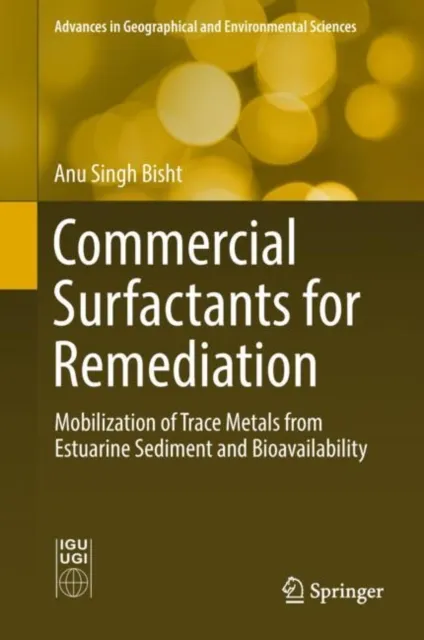
Commercial Surfactants for Remediation
Mobilization of Trace Metals from Estuarine Sediment and Bioavailability

Introduction
This book demonstrates the benefits of using commercially available surfactants, or surface-active agents, for remediation of metal-contaminated soil and sediment. First the book offers theoretical reviews of commercially available surfactants, then it proceeds to a study of various available surfactants for the mobilization of metals. Surfactants representative of amphiphiles discovered in the digestive environment of sediment-ingesting organisms are used to examine the extent and rate of metal (Al, Fe, Cd, Cu, Mn, Ni, Pb, Sn, Zn) mobilization from contaminated estuarine sediment. Metals can cause harmful effects to the environment and organisms. It is difficult to treat contaminants that are often tightly bound to the extremely small size of the estuarine sediments.
Mechanisms of Metal Mobilization
The book also demonstrates the mechanisms of metal mobilization that appear to be related to complexation with monomers and adsorption to micelles of the anionic amphiphiles, and to the denudation of hydrophobichost phases or coatings on the sediment by micelles of both anionic and nonionic surfactants.
Implications and Applications
Readers obtain a better understanding of current commercial surfactants, their impact on the environment, and possible remediation. This transdisciplinary book contributes toward Sustainable Development Goals numbers 6 (Clean Water and Sanitation) and 13 (Climate Action) set by the United Nations and is useful for students and teachers of sediment studies, coastal studies, environmental sciences, hydrology, civil engineering, and policy sciences.