£41.99
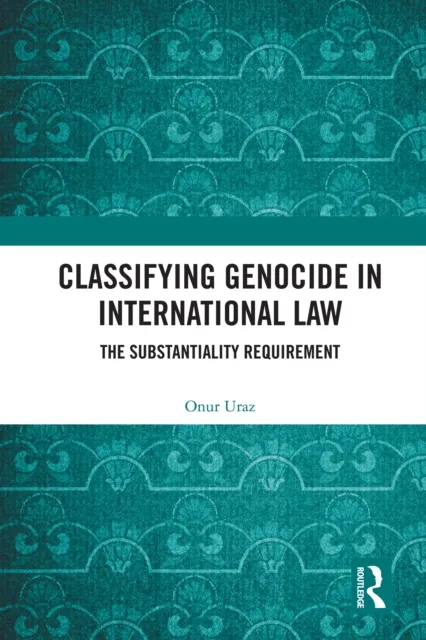
Classifying Genocide in International Law
The Substantiality Requirement

Introduction
This book offers an in-depth examination into genocide law by focusing on one of the lesser examined, yet practically significant, issues: the ‘substantiality requirement’. This refers to the requirement in international law that intended destruction should be directed towards a ‘substantial’ part of a protected group in order for an atrocity to qualify as genocide.
Scope and Approach
This comprehensive and detailed study draws connections between different judicial approaches to ‘substantiality’ and the varying theoretical presumptions about the constitutive concepts of the crime. This prima facie doctrinal problem is used as a springboard to scrutinise the broader theoretical problems underlying the legal conceptualisation of genocide.
Analysis of Conceptions
The book systematically explores how the individualistic and collectivistic conceptions of the crime have been able to co-exist in case law and how the different approaches to assessing substantiality have played a backdoor role between these two conceptions. The work demonstrates that these two philosophical standpoints are far from effectively representing the reality of the protected groups and fully explaining the harm inherent to group destruction.
Philosophical and Sociological Perspectives
The book revisits the recent philosophical and sociological studies on the crime and, considering ideas from the emerging ‘relational approaches to genocide’, offers a third way to understand the existing legal representation of the crime and, consequently, the idea of ‘substantiality’.
Practical Significance and Case Study
It demonstrates the practical significance of its theoretical debates and applies its novel perspective through a case study on South Sudan.
Target Audience
This book will be highly useful to students and scholars with an interest in genocide studies, international criminal law and legal theory. It will also be of interest to policymakers engaged with issues around genocide.