£59.99
Choral Conducting and the Construction of Meaning
Gesture, Voice, Identity

Introduction
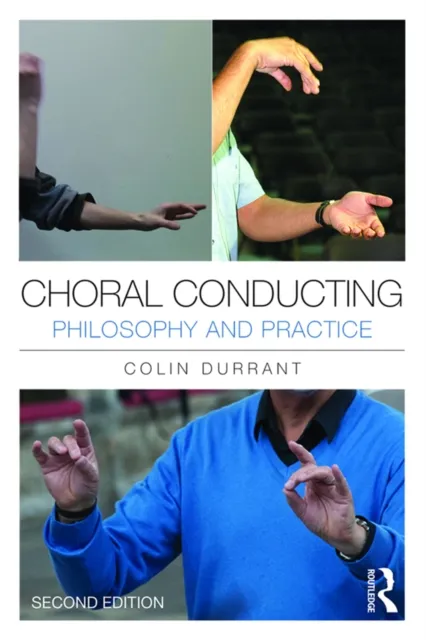
It is a truism in teaching choral conducting that the director should look like s/he wishes the choir to sound. The conductor's physical demeanour has a direct effect on how the choir sings, at a level that is largely unconscious and involuntary.
It is also a matter of simple observation that different choral traditions exhibit not only different styles of vocal production and delivery, but also different gestural vocabularies which are shared not only between conductors within that tradition, but also with the singers. It is as possible to distinguish a gospel choir from a barbershop chorus or a cathedral choir by visual cues alone as it is simply by listening.
Questions and Exploration
But how can these forms of physical communication be explained? Do they belong to a pre-cultural realm of primate social bonding, or do they rely on the context and conventions of a particular choral culture? Is body language an inherent part of musical performance styles, or does it come afterwards, in response to music?
At a practical level, to what extent can a practitioner from one tradition mandate an approach as good practice, and to what extent can another refuse it on the grounds that we don’t do it that way?
Scope and Methodology
This book explores these questions at both theoretical and practical levels. It examines textual and ethnographic sources, and draws on theories from critical musicology and nonverbal communication studies to analyse them.
By comparing a variety of choral traditions, it investigates the extent to which the connections between conductor demeanour and choral sound operate at a general level, and in what ways they are constructed within a specific idiom. Its findings will be of interest both to those engaged in the study of music as a cultural practice, and to practitioners involved in a choral conducting context that increasingly demands fluency in a variety of styles.