£51.99
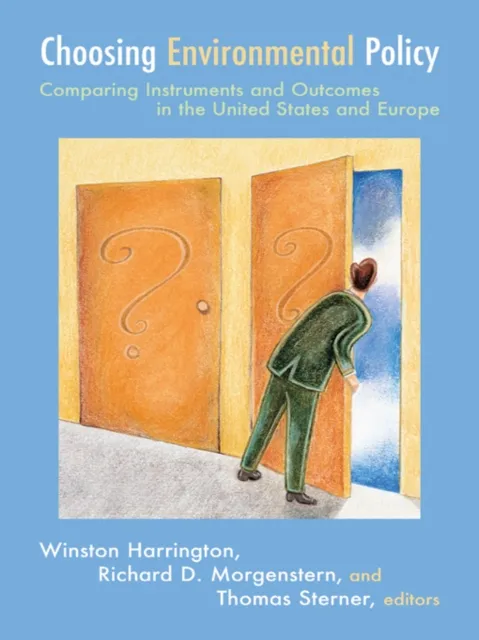
Choosing Environmental Policy
Comparing Instruments and Outcomes in the United States and Europe

Approaches to Environmental Policy
The two distinct approaches to environmental policy include direct regulation—sometimes called command and control policies—and regulation by economic, or market-based incentives. This book is the first to compare the costs and outcomes of these approaches by examining real-world applications.
Case Studies and Comparisons
In a unique format, paired case studies from the United States and Europe contrast direct regulation on one side of the Atlantic with an incentive-based policy on the other. For example, Germany’s direct regulation of SO2 emissions is compared with an incentive approach in the U.S. Direct regulation of water pollution via the U.S. Clean Water Act is contrasted with Holland’s incentive-based fee system. Additional studies contrast solutions for eliminating leaded gasoline and reducing nitrogen oxide emissions, CFCs, and chlorinated solvents.
Purpose and Audience
The cases presented in Choosing Environmental Policy were selected to allow the sharpest, most direct comparisons of direct regulation and incentive-based strategies. In practice, environmental policy is often a mix of both types of instruments. This innovative investigation will interest scholars, students, and policymakers who want more precise information as to what kind of “blend” will yield the most effective policy.
Key Questions Addressed
Are incentive instruments more efficient than regulatory ones? Do regulatory policies necessarily have higher administrative costs? Are incentive policies more difficult to monitor? Are firms more likely to oppose market-based instruments or traditional regulation? These are some of the important questions the authors address, often with surprising results.