£41.99
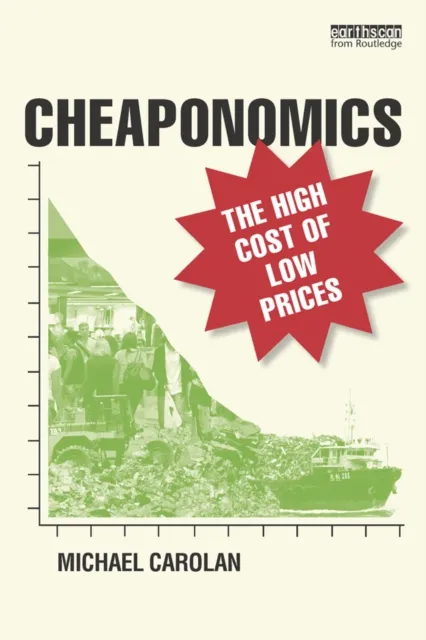
Cheaponomics
The High Cost of Low Prices

Do you really think you are getting a good deal when given that free mobile phone for switching service providers, if a multinational retailer undercuts its competitors or by the fact that food is relatively cheaper today in many countries than ever before?
Think again! As Michael Carolan clearly shows in this compelling book, cheapness is an illusion. The real cost of low prices is alarmingly high. It is shown for example that citizens are frequently subsidising low prices through welfare support to poorly-paid workers in their own country, or relying on the exploitation of workers in poor countries for cheap goods. Environmental pollution may not be costed into goods and services, but is paid for indirectly by people living away from its source or by future generations. Even with private cars, when the total costs of this form of mobility are tallied it proves to be an astronomically expensive model of transportation. All of these costs need to be accounted for.
The author captures these issues by the concept of "cheaponomics". The key point is that costs and risks are socialised: we all pay for cheapness, but not at the point of purchase. Drawing on a wide range of examples and issues from over-consumption and waste to over-work, unemployment, inequality, and the depersonalising of communities, it is convincingly shown that cheapness can no longer be seen as such a bargain. Instead we need to refocus for a better sense of well-being, social justice and a balanced approach to prosperity.