£41.40
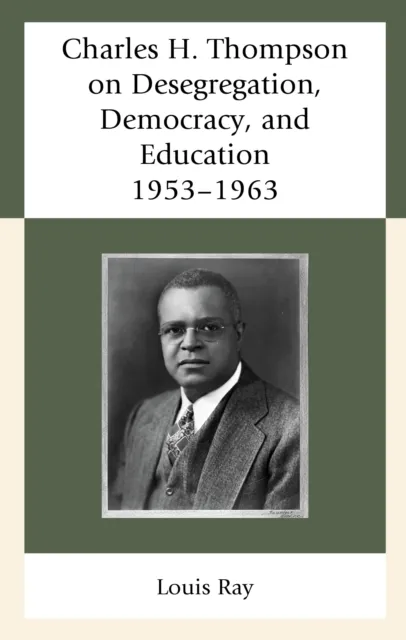
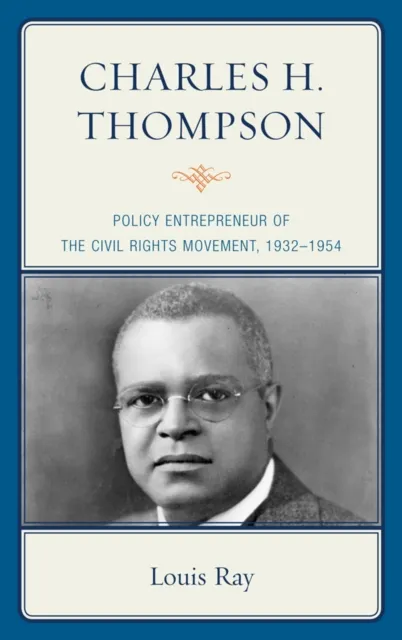
Charles H. Thompson
Policy Entrepreneur of the Civil Rights Movement

During a period when African-American education was at the epicenter of the civil rights movement, Thompson’s Journal documented the rapid growth of educational discrimination in the South despite significant increases in public school funding, providing irrefutable evidence that racially segregated public education was inherently discriminatory, hence, unconstitutional.
Between 1932 and 1954, Thompson’s editorials provided a nuanced, insider’s account of one of the most successful policy research ventures in American history: the movement to overturn racial segregation as public policy, chronicling the rise during the Depression, World War II and the postwar period of a policy community committed to expanding human rights nationally and internationally.
A brilliant essayist, Thompson sought to close the gap between America’s democratic precepts and its undemocratic practices by molding public opinion favorable to a significant expansion of civil rights among scholars, policymakers and the public.
An expert witness in several landmark higher education cases argued before the U. S. Supreme Court including Sipuel (1948), Sweatt (1950) and McLaurin (1950), Thompson’s editorials provided an informed, eyewitness account of African-American teachers’ pivotal role in the NAACP litigation campaign culminating in the landmark Brown et al v. Board of Education of Topeka et al (1954) desegregation ruling.
This is the first, full-length study of Charles H. Thompson’s contributions to American education and the civil rights movement.