£119.50
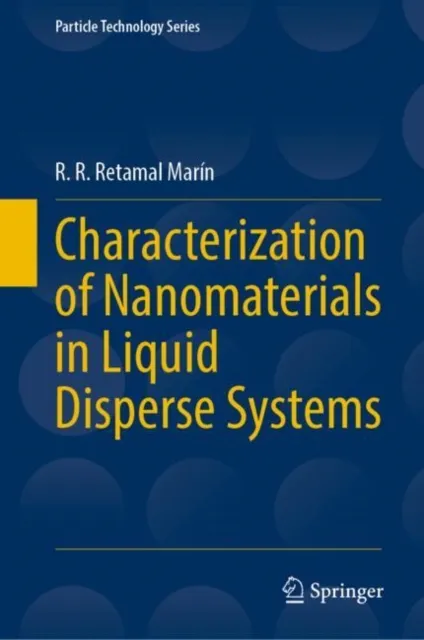
Characterization of Nanomaterials in Liquid Disperse Systems

Introduction
This book describes different aspects of characterization and detection of nanomaterials in liquid disperse systems, such as suspensions, emulsions and suspoemulsions. Natural and technical particulate nanomaterials (NMs) are often present in formulations and products consisting of several disperse phases and complex dispersion media. Specific interfacial properties of the particles, their interactions with each other and with the dispersion medium, have to be considered. For example, the interfacial properties determine whether the particles tend to be arranged in aqueous or lipid phases or at their phase boundaries. The interfacial properties are significantly influenced by the adsorption of dissolved species, i.e., they depend on the composition of the dispersion medium. This poses great challenges for the characterization of these nanoparticle systems and requires adequate preparation methods.
Measurement Techniques and Challenges
The nanoparticle measurement techniques aim at a deep physico-chemical understanding of the dispersity state of nanoparticle systems. Since the dispersity state of nanoparticle systems in an application usually does not correspond to their original manufacturing process, the formulation of new or improved product properties is of decisive importance. The characterization of nanoparticles in complex formulations or matrices requires an adequate sample preparation based on an existing or yet to be developed Standard Operating Procedure (SOP). The structure of the SOPs includes the dispersion regulations, which are of essential importance for comparing reproducible results of nanoparticle measurement with respect to comparability and transferability worldwide. The aim is to separate and isolate relevant NMs with knowledge of the interrelationships.