£34.29
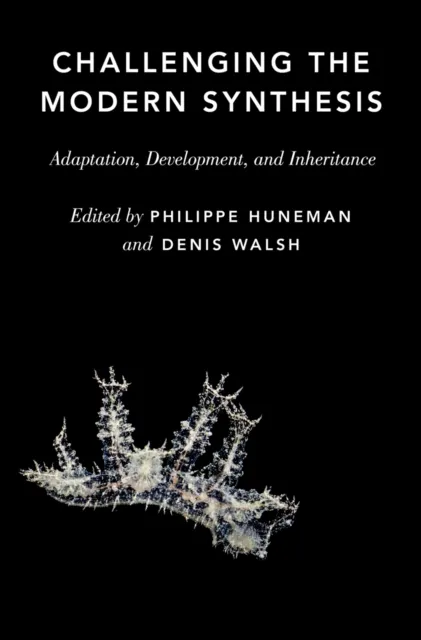
Challenging the Modern Synthesis
Adaptation, Development, and Inheritance

Introduction to the Modern Synthesis
Since its origin in the early 20th century, the Modern Synthesis theory of evolution has grown to become the orthodox view on the process of organic evolution. Its central defining feature is the prominence it accords to genes in the explanation of evolutionary dynamics.
Challenges in the 21st Century
Since the advent of the 21st century, however, the Modern Synthesis has been subject to repeated and sustained challenges. These are largely empirically driven. In the last two decades, evolutionary biology has witnessed unprecedented growth in the understanding of those processes that underwrite the development of organisms and the inheritance of characters. The empirical advances usher in challenges to the conceptual foundations of evolutionary theory. The extent to which the new biology challenges the Modern Synthesis has been the subject of lively debate.
Debate and Perspectives
Many current commentators charge that the new biology of the 21st century calls for a revision, extension, or wholesale rejection of the Modern Synthesis Theory of evolution. Defenders of the Modern Synthesis maintain that the theory can accommodate the exciting new advances in biology. The original essays collected in this volume survey the various challenges to the Modern Synthesis arising from the new biology of the 21st century.
Contributors and Content
The authors are evolutionary biologists, philosophers of science, and historians of biology from Europe and North America. Each of the essays discusses a particular challenge to the Modern Synthesis treatment of inheritance, development, or adaptation. Taken together, the essays cover a spectrum of views, from those that contend that the Modern Synthesis can rise to the challenges of the new biology, with little or no revision required, to those that call for the abandonment of the Modern Synthesis.
Intended Audience
The collection will be of interest to researchers and students in evolutionary biology, and the philosophy and history of the biological sciences.