£45.99
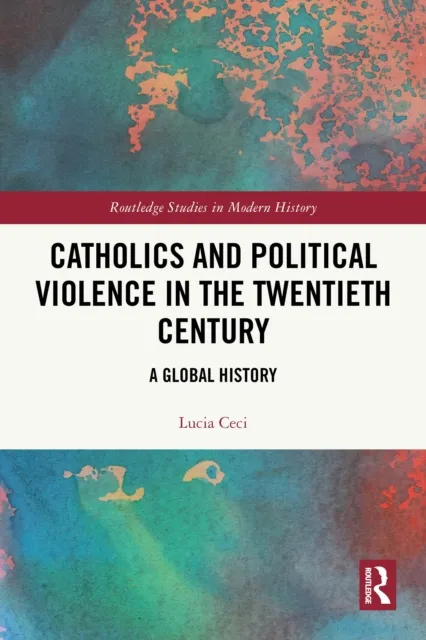
Catholics and Political Violence in the Twentieth Century
A Global History

Catholics and Political Violence in the Twentieth Century presents a historical reconstruction of the ways in which Catholics have justified the recourse to political violence during the twentieth century, a period marked by major wars, nationalisms, decolonization, ideological clashes, and episodes of genocide. Legitimation processes are particularly complex when this violence is not endorsed by the state, and perhaps used against it. Depending on perspective, the protagonists of this radical form of collective action may be seen as ‘terrorists’ or ‘freedom fighters’.
Written by a leading historian of contemporary Catholicism, this book examines a series of case studies from different parts of the world, selected because of the central role played by the Catholic religion. They range from Northern Ireland to the Basque Country, from the Philippines to Colombia, and from Mexico to Rwanda. It highlights how theological sources, paradigms of martyrdom, and symbols of the Christian tradition have provided a catalogue of reasons to give moral value to violence and promote it in the name of God.
By looking at the history of Catholicism in global terms and adopting a transnational perspective, Catholics and Political Violence in the Twentieth Century sheds a critical light on the themes that are crucial to understanding the relationship between religion and violence. It will appeal to scholars and students working and studying in the fields of Modern and Contemporary History, Religious Studies, Terrorism Studies, Cultural and Global Studies, Intellectual History, and the History of Political Thought.