£129.50
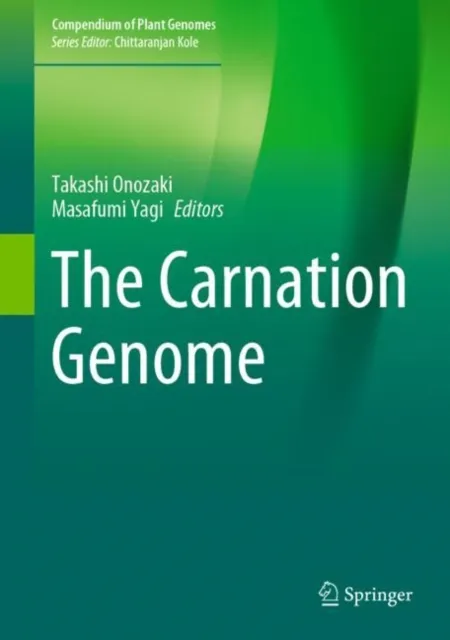
Carnation Genome

Summary of Content
This book summarizes recent advances in carnation genome research for large-scale transcriptome analysis, the draft genome sequence, DNA markers and genome mapping, flower color, mutations, flower opening, vase life, interspecific hybridization, fragrance.
Importance of Carnation
The carnation is one of the most important ornamental flowers in the world, along with the chrysanthemum and the rose. The genus Dianthus is a member of the Caryophyllaceae and includes more than 300 species of annuals and evergreen perennials. Modern carnation cultivars are the product of highly complex hybridization, owing to their long history of breeding.
Genome Sequencing and Research
The carnation genome was first sequenced in ornamentals by a Japanese research team in 2013. The carnation has been genetically improved over the years, and there are various types of flower colors, shapes, patterns, and sizes. In this book, the molecular mechanism of flower color development and the transposable elements responsible for this diversity are studied in detail.
Breeding and Physiological Studies
In addition, it presents breeding and physiological research for improving flower vase life, one of the most important traits in ornamentals, based on a model of ethylene susceptible flowers. To improve selection efficiency, genomic analysis tools including DNA markers and genetic linkage maps are also highlighted.
Technologies and Future Directions
In closing, the book discusses mutation breeding technologies such as ion-beam irradiation and genetically modified carnations.