£179.50
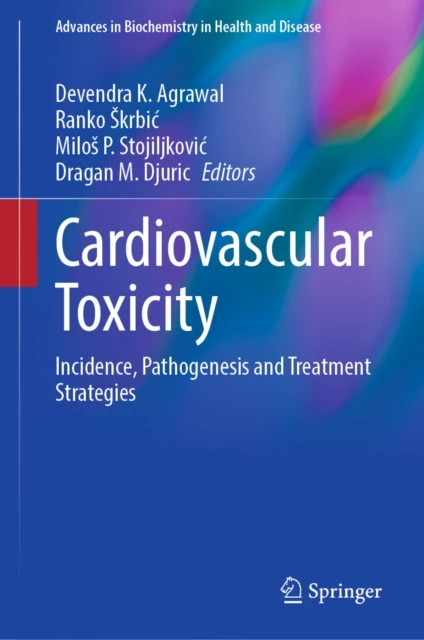
Cardiovascular Toxicity
Incidence, Pathogenesis and Treatment Strategies

The importance of the cardiovascular system
The cardiovascular system is vital for human well-being, playing key roles in thermoregulation, nutrient transport, fluid balance, and protection from infection. Cardiovascular diseases are leading causes of morbidity and mortality.
Causes of cardiovascular toxicity
Pharmaceuticals, illicit drugs, toxins, and environmental factors can induce cardiovascular toxicity, causing structural changes and impairing blood flow. Co-morbidities like diabetes and obesity, along with epigenetic factors and infections, further enhance cardiovascular toxicity.
Importance of understanding and developing therapies
Understanding these factors and developing better therapeutic approaches is crucial. New drugs and vaccines have improved disease treatment, but they can also induce adverse effects by affecting the endothelium, coagulation factors, platelet activation, oxidative stress, inflammation, baroreceptors, autonomic cardiovascular control, and electrophysiology. This issue has been overlooked for a long time but is now gaining attention. Expanding knowledge to the general population and health practitioners, increasing research activities, and developing better preventive and treatment strategies are essential.
Drug-induced cardiovascular adverse effects
Cardiovascular adverse effects can be induced by various drug classes used in cancer treatment, infections, and other disorders. Understanding the mechanisms of cardiovascular toxicity and prevention methods is critical.
About the book
This book, with 40 chapters contributed by distinguished scientists, explores these issues, highlighting knowledge gaps, future directions, and key points. Understanding the biological complexity and interactions between genetic and environmental factors is crucial for developing better therapeutic approaches.