£28.99
£33.99
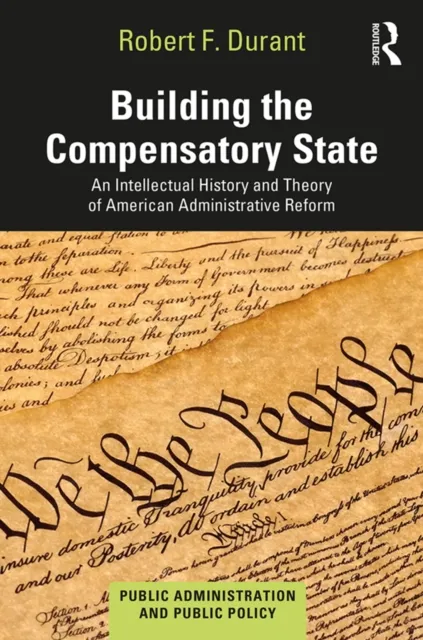
Building the Compensatory State
An Intellectual History and Theory of American Administrative Reform

Introduction
Contemporary public administration research has marginalized the importance of “taking history seriously.” With few exceptions, little recent scholarship in the field has looked longitudinally (rather than cross-sectionally), contextually, and theoretically over extended time periods at “big questions” in public administration. One such “big question” involves the evolution of American administrative reform and its link since the nation’s founding to American state building. This book addresses this gap by analyzing administrative reform in unprecedented empirical and theoretical ways. In taking a multidisciplinary approach, it incorporates recent developments in cognate research fields in the humanities and social sciences that have been mostly ignored in public administration. It thus challenges existing notions of the nature, scope, and power of the American state and, with these, important aspects of today’s conventional wisdom in public administration.
Author's Perspective
Author Robert F. Durant explores the administrative state in a new light as part of a “compensatory state”—driven, shaped, and amplified since the nation’s founding by a corporate–social science nexus of interests. Arguing that this nexus of interests has contributed to citizen estrangement in the United States, he offers a broad empirical and theoretical understanding of the political economy of administrative reform, its role in state building, and its often paradoxical results. Offering a reconsideration of conventional wisdom in public administration, this book is required reading for all students, scholars, or practitioners of public administration, public policy, and politics.