£33.99
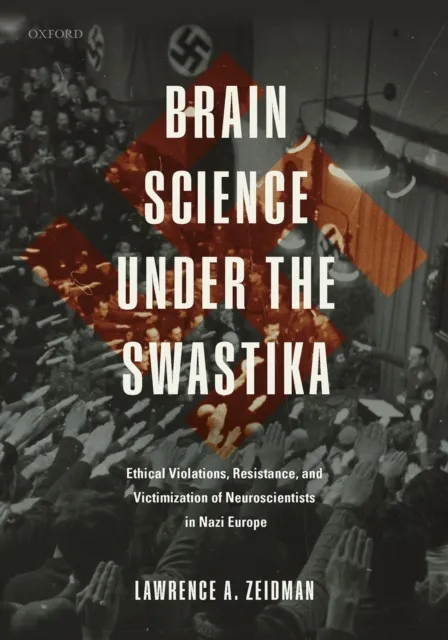
Brain Science under the Swastika
Ethical Violations, Resistance, and Victimization of Neuroscientists in Nazi Europe

Eighty years ago the largest genocide ever occurred in Nazi Europe.
This began with the mass extermination of patients with neurologic and psychiatric disorders that Hitler's regime considered "useless eaters". The neuropsychiatric profession was systematically "cleansed" beginning in 1933, but racism and eugenics had infiltrated the specialty long before that. With the installation of Nazi-principled neuroscientists, mass forced sterilization was enacted, which transitioned to patient murder by the start of World War II. But the murder of roughly 275,000 patients was not enough. The patients' brains were stored and used in scientific publications both during and long after the war. Also, patients themselves were used for unethical experiments. Relatively few neuroscientists resisted the Nazis, with some success in the occupied countries. Most neuroscientists involved in unethical actions continued their careers unscathed after the war. Few answered for their actions, and few repented.
The legacy of such a depraved era in the history of neuroscience and medical ethics is that codes now exist to protect patients and research subjects. But this protection is possibly subject to political extremes and individual neuroscientists can only protect patients and colleagues if they understand the dangers of a utilitarian, unethical, and uncompassionate mindset.
Brain Science under the Swastika
is the only comprehensive and scholarly published work regarding the ethical and professional abuses of neuroscientists during the Nazi era. The author has crafted a scathing tour de force exploring the extremes of ethical abuse, but also ways that this can be resisted and hopefully prevented by future generations of neuroscientists and physicians.