£115.00
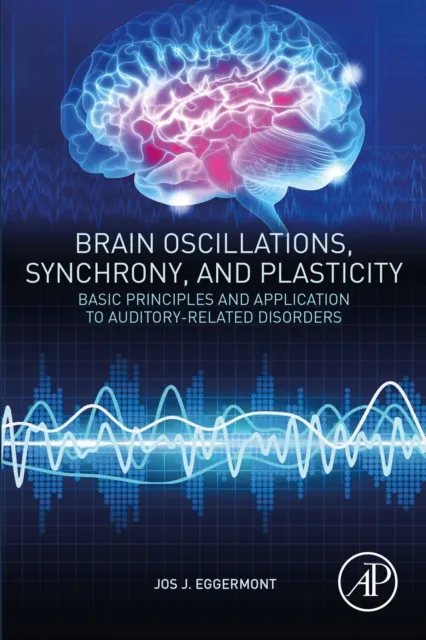
Brain Oscillations, Synchrony and Plasticity
Basic Principles and Application to Auditory-Related Disorders

Brain Oscillations, Synchrony and Plasticity: Basic Principles and Application to Auditory-Related Disorders
Discusses the role of brain oscillations, especially with respect to the auditory system and how those oscillations are measured, change over the lifespan, and falter leading to a variety of psychiatric and neurological disorders. The book begins with a description of these cortical rhythm oscillations and how they function in both the normal and pathological brain. It explains how these oscillations are important to auditory, executive and attention brain networks and how they relate to the development, production and deterioration of speech and language.
In addition, treatment of malfunctioning cortical rhythms are reviewed using neuromodulation, such as transcranial magnetic, direct current, random noise, and alternating current stimulation, as well as focused ultrasound. The book concludes by describing the potential role of oscillations in dyslexia, autism, schizophrenia and Alzheimer''s disease.
Introduces readers to brain imaging methods such as structural and functional magnetic resonance imaging, EEG and magnetoencephalography, in the study of brain oscillations, synchrony and networks of the normal and pathological brain
Highlights the role of brain oscillations in perception and cognition, in particular with respect to the auditory system, speech and language
Describes lifespan changes, from preterm to senescence, of brain oscillations, brain networks and how they relate to the development and deterioration of speech and language
Explains the effects of hearing loss on neural network change in the auditory and non-auditory networks such as the default mode-, the salience-, the executive- and attention networks
Illustrates the breakdown of network connections in auditory-related disorders such as tinnitus and in psychiatric disorders with a strong auditory, speech and language component