£2.99
Bookkeeping for Small Businesses
Simple steps to becoming a confident bookkeeper

Is this the right book for me?
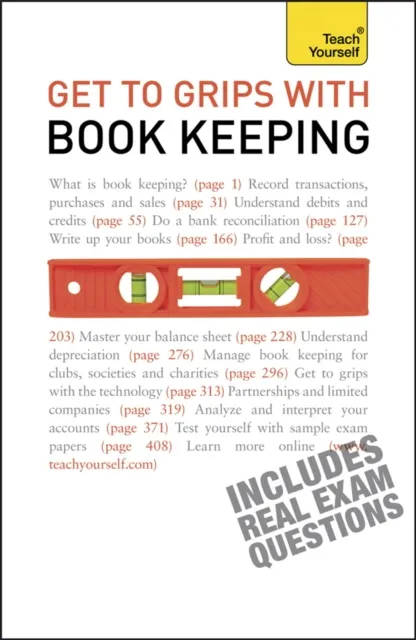
Book keeping is neither dull nor mysterious - its rules are logical and straightforward and are readily mastered by practice. Successful Bookkeeping for Small Business is a substantial yet easy to follow introduction to the principles of bookkeeping and the practical skills of recording transactions, posting the ledgers and preparing final accounts.
Written by finance and accounting experts from the University of Birmingham this book:
- Explains the purpose and use of books of original entry as the basis of the double-entry system.
- Describes the processes of recording purchases, sales and cash transactions.
- Shows how these records are used to prepare the final accounts, the manufacturing, trading and profit and loss accounts and the balance sheet to provide accurate financial statements.
- Explores petty cash, depreciation, partnership, company law, business documents and the effect of changes in IT.
Worked examples throughout allow you to put the theory into practice. There is also a wide range of carefully graded questions and exercises with sample answers. In short, it demystifies the art of bookkeeping and gives you the confidence you need to tackle your books.
Successful Bookkeeping for Small Business includes:
- What is book keeping?
- Business documents
- The business transaction, purchases and sales
- Purchase and sales transactions and ledger accounts
- Cash transactions
- The bank reconciliation
- Petty cash
- The (general) journal
- Writing up the books
- The trial balance
- What is profit or loss?
- The revenue account: the trading, profit and loss and appropriation accounts
- The balance sheet
- Adjustments in the final accounts
- Depreciation
- Clubs, societies and charities book keeping
- Information technology and book keeping
- Partnerships
- Limited companies
- The analysis and interpretations of accounts
Learn effortlessly with a new easy-to-read page design and added features:
Not got much time?
One, five and ten-minute introductions to key principles to get you started.
Author insights
Lots of instant help with common problems and quick tips for success, based on the authors' many years of experience.
Test yourself
Tests in the book and online to keep track of your progress.
Extend your knowledge
Extra online articles to give you a richer understanding of bookkeeping.
Try this
Innovative exercises illustrate what you've learnt and how to use it.