£45.99
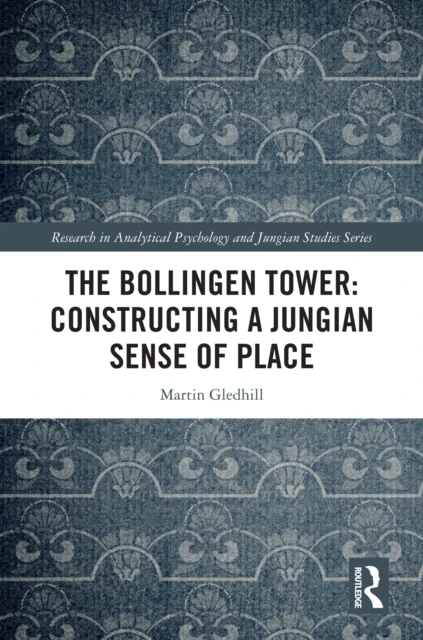
Bollingen Tower: Constructing a Jungian Sense of Place

Overview
Offering a novel conceptual methodology where Jungian psychology is used to analyse Jung's own architecture, this book offers an innovative reading of Jung's Bollingen Tower in order to explore a Jungian sense of place, situating it within a wider examination of the psychic places that influenced his work.
Significance
Representing the first comprehensive study of Jung's building activities, the chapters illuminate the wider purpose of architecture as a reflection of self and a means to belong in the world.
Methodology
Using the author's own fieldwork, interviews with descendants, and detailed analysis of Jung's autobiography and copious writings drawn from his own imagination and psyche, chapters explore themes such as the relationship between psyche and geometry, the idea of psychic place, and 'inner' and 'outer' in analytical psychology.
Comparative Analysis
In discussing the legacy and the predominance of Bollingen Tower as the defining spatial motif of Jung's psychological system, the chapters also cover comparisons with Marie-Louise von Franz's Tower and Christiana Morgan's Tower.
Author's Background
The author's own background as an award-winning architect, alongside a lifelong study of analytical psychology, makes him uniquely placed to shed light on this as-yet underexplored area of study.
Broader Context
The book opens up interdisciplinary dialogues and provides a broader context for understanding the relationship between the environment and the psyche. It will therefore be of interest to scholars and postgraduate students in the fields of Jungian and analytical psychology and architecture.