£249.50
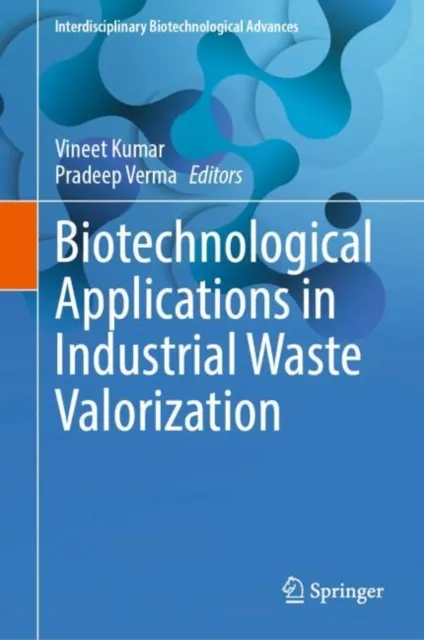
Biotechnological Applications in Industrial Waste Valorization

Overview
This book overviews the cutting-edge applications of biotechnological tools and techniques in valorizing industrial waste to achieve the United Nations Sustainable Development Goals. It provides comprehensive insights into the latest research, technologies, processes, and case studies, making it an invaluable resource for researchers, professionals, policymakers, and students interested in waste management, bioenergy recovery, and sustainable development.
Impact and Goals
By transforming industrial waste into high-value products, this book fosters a circular economy and lessens environmental strain, bridging the gap between academia and industry with practical solutions and innovative strategies. It seeks to fill the gap between academics and industry by outlining workable solutions and discussing cutting-edge tactics that can be used in realistic situations.
Technological Focus
While providing an in-depth exploration of advanced biotechnological techniques being widely used to valorize industrial waste, the book covers a wide range of issues that help academics and professionals efficiently deal with various waste streams, such as microbial bioremediation, renewable energy, resource recovery, enzymatic degradation, metabolic engineering, bioprocess development, and others.
Target Audience and Purpose
The book intends to motivate and guide students, researchers, practitioners, and policymakers in pursuing sustainable waste management strategies by exhibiting the revolutionary power of microbial technology. The concise and impartial content structure will also benefit corporate researchers.
Conclusion
It is an essential resource for anyone interested in the intersection of biotechnology and environmental sustainability, offering insights that are both academically rigorous and practically applicable.