£139.50
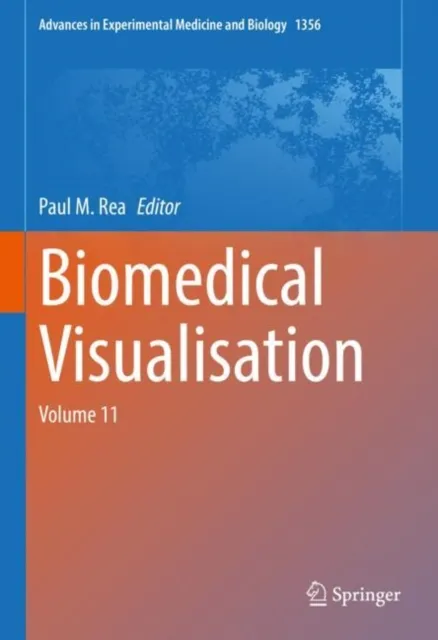
Biomedical Visualisation
Volume 11

This edited book explores the use of technology to enable us to visualise the life sciences in a more meaningful and engaging way. It will enable those interested in visualisation techniques to gain a better understanding of the applications that can be used in visualisation, imaging and analysis, education, engagement and training. The reader will also be able to learn about the use of visualisation techniques and technologies for the historical and forensic settings.
Range of Topics Covered
The chapters presented in this volume cover such a diverse range of topics, with something for everyone. We present here chapters on 3D visualising novel stent grafts to aid treatment of aortic aneuryms; confocal microscopy constructed vascular models in patient education; 3D patient specific virtual reconstructions in surgery; virtual reality in upper limb rehabilitation in patients with multiple sclerosis and virtual clinical wards. In addition, we present chapters in artificial intelligence in ultrasoundguided regional anaesthesia; carpal tunnel release visualisation techniques; visualising for embryology education and artificial intelligence data on bone mechanics. Finally we conclude with chapters on visualising patient communication in a general practice setting; digital facial depictions of people from the past; instructor made cadaveric videos, novel cadaveric techniques for enhancing visualisation of the human body and finally interactive educational videos and screencasts.
Purpose and Audience
This book explores the use of technologies from a range of fields to provide engaging and meaningful visual representations of the biomedical sciences. It is therefore an interesting read for researchers, developers and educators who want to learn how visualisation techniques can be used successfully for a variety of purposes, such as educating students or training staff, interacting with patients and biomedical procedures in general.