£57.39
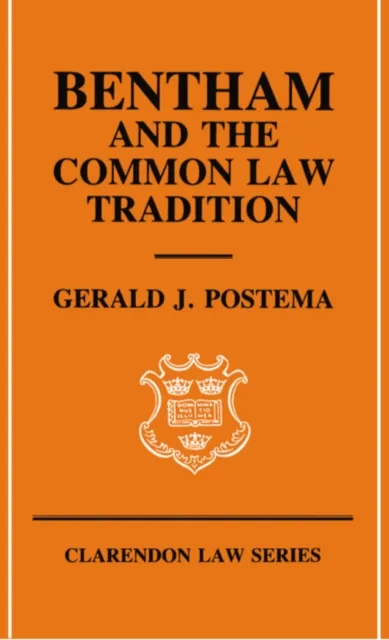
Bentham and the Common Law Tradition

Introduction
This work explores the relationship between Bentham's utilitarian practical philosophy and his positivist jurisprudence. These theories appear to be in tension because his utilitarian commitment to the sovereignty of utility as a practical decision principle seems inconsistent with his positivist insistence on the sovereignty of the will of the lawmaker.
Reconciliation of Core Elements
Two themes emerge from the attempt in this work to reconcile these two core elements of Bentham's practical thought. First, Bentham's conception of law does not fit the conventional model of legal positivism. Bentham was not just a utilitarian and a positivist; he was a positivist by virtue of his commitment to a utilitarian understanding of the fundamental task of law. Moreover, his emphasis on the necessary publicity and the systemic character of law, led him to insist on an essential role for utilitarian reasons in the regular public functioning of law.
Second, Bentham's radical critique of common law theory and practice convinced him of the necessity to reconcile the need for certainty of law with an equally great need for its flexibility. He eventually developed a constitutional framework for adjudication in the shadow of codified law that accorded to judges discretion to decide particular cases according to their best judgment of the balance of utilities, guaranteeing the accountability and appropriate motivation of judicial decision-making through institutional incentives.
Publication and Revisions
The original text of this work, first published in 1986, remains largely unchanged, but an afterword reconsiders and revises some themes in response to criticism.