£89.50
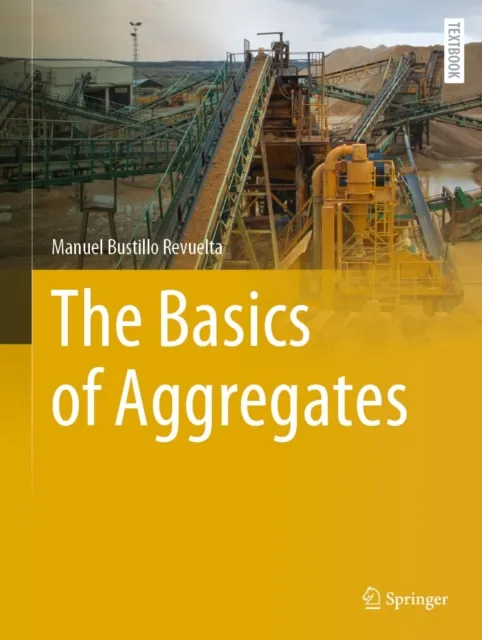
Basics of Aggregates

Aggregates and Their Importance
Aggregates are among the most common natural resources used in everyday's life, having enhanced life quality. They are essential for construction, being utilized in nearly all residential, commercial, and industrial building construction and most public work projects such as roads, highways and bridges, railroad beds, dams, airports, tunnels, and many others. In the future, the rebuilding of deteriorated roads, highways, bridges, airports, seaports, and private and public buildings will require vast amounts of aggregate. Although it is almost impracticable to know the total amount of aggregates extracted every year globally, it is roughly estimated that annual aggregate production totals about 25 billion tons. Both developed and developing nations require extensive use of aggregates.
The Book: The Basics of Aggregates
The book "The Basics of Aggregates" covers all topics related to utilizing this type of material, including the properties of aggregates, types of deposits, geological occurrence, exploration methodologies and extraction methods, and processing techniques as well as their main applications and the importance of recycled aggregates. It serves as a basic text on aggregates for natural sciences and provides information about the main aggregate materials comprehensively with extensive number of illustrations and equips students to handle the mining cycle of aggregates. It enhances the understanding of the different aggregate types, being interdisciplinary and practice-oriented.
Intended Audience
This textbook addresses bachelor and master students of geology and general earth science as well as students of engineering and environmental sciences. It is written for undergraduate and graduate students, researchers and professionals alike.