£16.79
Basic Statistics in Multivariate Analysis

Introduction
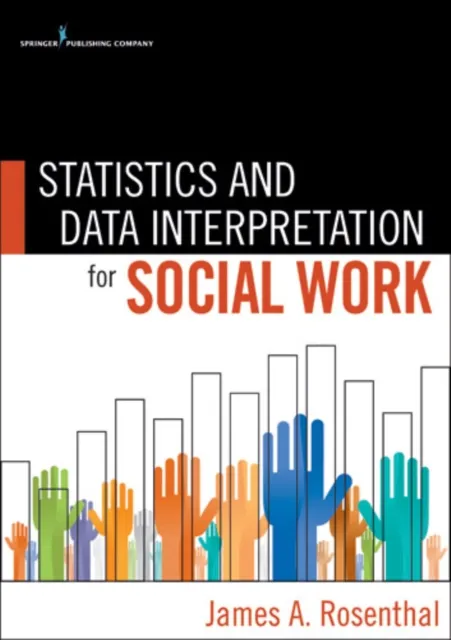
The complexity of social problems necessitates that social work researchers understand and apply multivariate statistical methods in their investigations. In this pocket guide, the authors introduce readers to three of the more frequently used multivariate methods in social work research with an emphasis on basic statistics. The primary aim is to prepare entry-level doctoral students and early career social work researchers in the use of multivariate methods by providing an easy-to-understand presentation, building on the basic statistics that inform them.
Content Overview
The pocket guide begins with a review of basic statistics, hypothesis testing with inferential statistics, and bivariate analytic methods. Subsequent sections describe bivariate and multiple linear regression analyses, one-way and two-way analysis of variance (ANOVA) and covariance (ANCOVA), and path analysis.
Methodological Details
In each chapter, the authors introduce the various basic statistical procedures by providing definitions, formulas, descriptions of the underlying logic and assumptions of each procedure, and examples of how they have been used in social work research literature, particularly with diverse populations. They also explain estimation procedures and how to interpret results.
Practical Applications
The multivariate chapters conclude with brief step-by-step instructions for conducting multiple regression analysis and one-way ANOVA in Statistical Package for the Social Sciences (SPSS), and path analysis in Amos, using data from the National Educational Longitudinal Study of 1988 (NELS: 88). As an additional supplement, the book offers a companion website that provides more detailed instructions, as well as data sets and worked examples.