£34.99
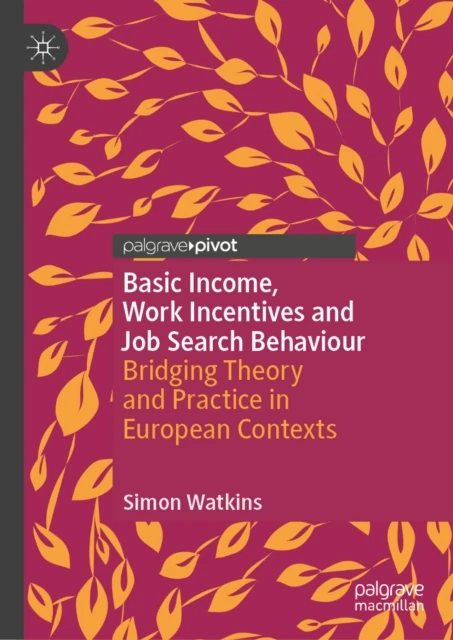
Basic Income, Work Incentives and Job Search Behaviour
Bridging Theory and Practice in European Contexts

Book Analysis and Framework
This book analyzes existing welfare regimes across Europe, offering an exploration into how basic income principles might influence job search behaviour. Drawing on time-use data and fuzzy-set qualitative comparative analysis, it challenges assumptions about work incentives and demonstrates that institutional contexts significantly mediate welfare effects.
Innovative Framework
The analysis develops an innovative “ideal type” framework that measures how existing systems approximate basic income principles, unconditionality, universalism, and non-withdrawal of benefits.
Welfare Design and Job Search
Chapters explore the complex relationships between welfare design and job search intensity, with a special focus on providing evidence as to whether conditionality increases job search or if certain configurations of accessibility and high participation tax rates decrease it.
Comparative Analysis
Comparing ten European countries and counterfactual examination of Finland and the UK, the book provides empirical grounding for debates often based on theoretical assumptions.
Implications for Policy
The resulting text provides insights for designing context-appropriate strategies for basic income implementation that enhance income security while preserving individual autonomy.