£45.99
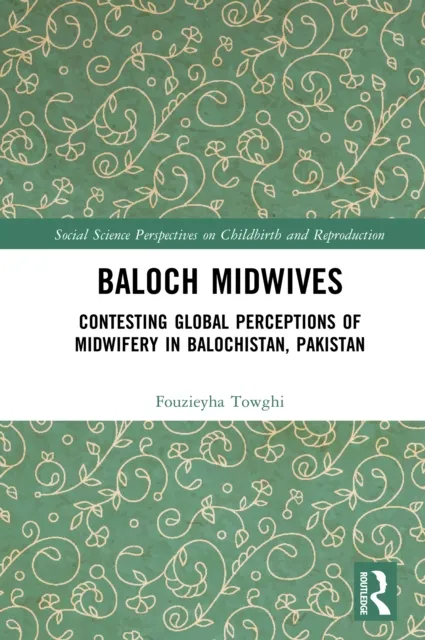
Baloch Midwives
Contesting Global Perceptions of Midwifery in Balochistan, Pakistan

Overview
This book is the first major ethnography of Baloch midwives in Pakistan. Drawing on long-term ethnographic research in Balochistan province, it shows how dhīnabogs/dheenabogs (Baloch midwives ranging in age from about 30 to 80) and their dhīnabogirī (midwifery) aid women and their kin through labor and postpartum recovery.
Historical and Cultural Context
Its chapters show how Baloch midwives’ forms and ethics of care have persisted, despite nearly two centuries of British colonial policies and the subsequent disparaging official views regarding South Asian Indigenous midwives, commonly known as dāīs, in both postcolonial India and Pakistan. Through their continued presence and effective uses of their traditional medicine, Baloch midwives contain, mediate, and offer a powerful critique of women’s iatrogenic suffering caused by unnecessary biomedical interventions.
Ethical Approach and Impact
Through a nuanced analysis of Baloch midwives' ethical approach to caring for women, and their responses to the exigencies of women’s health, this book demonstrates why over a century of state efforts to modernize and biomedicalize childbirth practices have failed to convince the majority of Baloch women in Balochistan to give birth in hospitals. They instead prefer home births and the midwifery care from the dhīnabogs whom they trust.
Audience and Relevance
This book will not only be of interest to scholars and students in anthropology, medical humanities, public health, sociology, gender and women’s studies, gender and medical history, South Asia studies, and global health studies, but also to those in the midwifery and the nursing profession. It will also be of interest to non-academic readers wishing to learn about midwives in South Asia and anyone interested in reading about traditional medicine and midwives who practice outside of European and North American cultural contexts.