£89.99
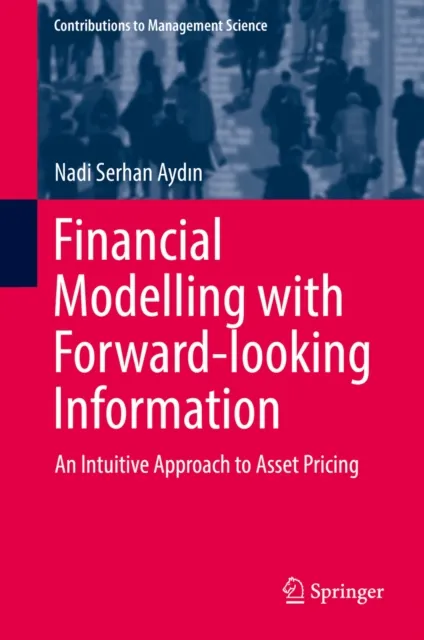
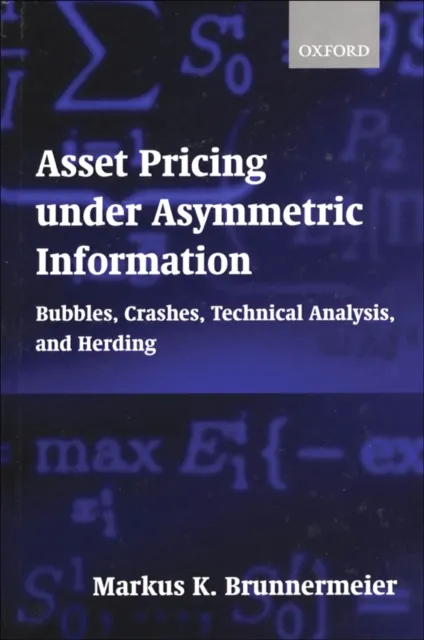
Asset Pricing under Asymmetric Information
Bubbles, Crashes, Technical Analysis, and Herding

Asset Price Dynamics and Information
Asset prices are driven by public news and information that is often dispersed among many market participants. These agents try to infer each other''s information by analyzing price processes. In the past two decades, theoretical research in financial economics has significantly advanced our understanding of the informational aspects of price processes. This book provides a detailed and up-to-date survey of this important body of literature.
Modeling Asymmetric Information
The book begins by demonstrating how to model asymmetric information and higher-order knowledge. It then contrasts competitive and strategic equilibrium concepts under asymmetric information. It also illustrates the dependence of information efficiency and allocative efficiency on the security structure and the linkage between both efficiency concepts.
No-Trade Theorems and Market Breakdowns
No-Trade theorems and market breakdowns due to asymmetric information are then explained, and the existence of bubbles under symmetric and asymmetric information is investigated.
Market Microstructure and Behavioral Models
The remainder of the survey is devoted to contrasting different market microstructure models that demonstrate how asymmetric information affects asset prices and traders'' information, which provide a theoretical explanation for technical analysis and illustrate why some investors "chase the trend."
Herding and Informational Cascades
The reader is then introduced to herding models and informational cascades, which can arise in a setting where agents'' decision-making is sequential. The insights derived from herding models are used to provide rational explanations for stock market crashes.
Information Search and Market Comparisons
Models in which all traders are induced to search for the same piece of information are then presented to provide a deeper insight into Keynes'' comparison of the stock market with a beauty contest.
Market Crises and Final Remarks
The book concludes with a brief summary of bank runs and their connection to financial crises.