£3.99
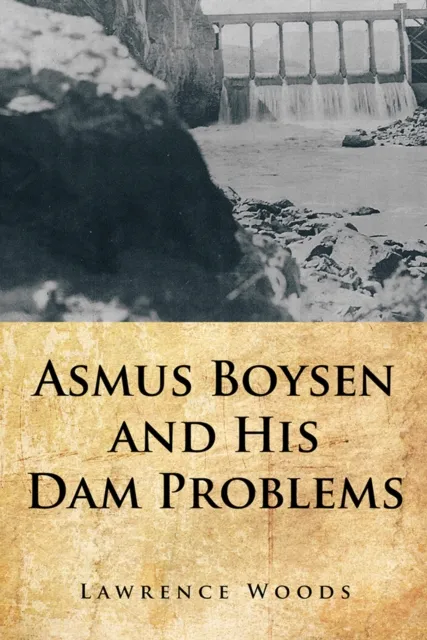
Asmus Boysen and His Dam Problems

Asmus Boysen's Early Life and Ambitions
Asmus Boysen was not yet eighteen when he stepped off the ship in New York in the spring of 1886, hoping to make his fortune in the free environment of the United States. In a remarkably short time, he did just that, marrying a beautiful and wealthy woman, building a considerable estate, and making many friends, some of them influential in the political life of the country.
Fate and the Wyoming Land
But fickle Fate lured him to an Indian reservation in the middle of Wyoming, where he used his newly-acquired political influence to lease a huge tract of land to look for coal. The search for coal proved unrewarding, but Boysen parlayed the worthless lease into a square mile of mineral land athwart a rugged canyon, where he hoped to find precious metals. Alas, that hope was doomed, as well, and he then committed his fortune (and the money of others) to a dam and power plant, in the vain hope to recover it all and more from the sale of power to a new mining industry and the crowd of settlers expected on the reservation land.
Legal Struggles and the Loss of Wealth
His quest for success was further hampered by the appearance of lawyer John T. Clarke, who successfully claimed and tenaciously clung to a share in Boysen's property, in a struggle before a number of courts—a struggle that exhausted both their fortunes. In the end, neither was a winner, as a railroad, the State of Wyoming, and the river conspired to rob both of the hoped-for pot of gold.
The Legacy of Boysen
The dam Boysen built is gone, but an ironic vindication of Boysen's original dream is the government's much larger Boysen dam, just upriver from Boysen's location, proving that it made sense to erect a dam and power plant there, if the builder was rich enough and powerful enough.