£66.99
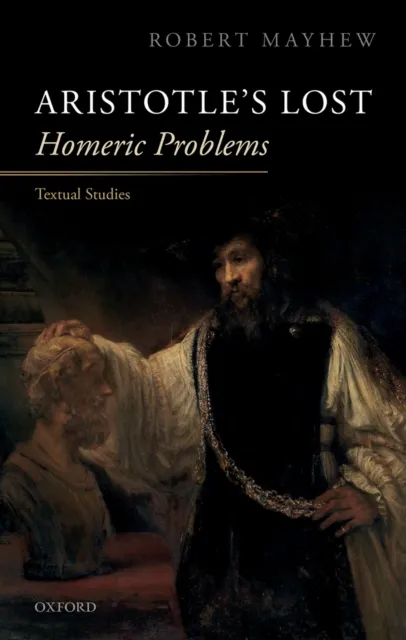
Aristotle's Lost Homeric Problems
Textual Studies

Introduction
This volume takes as its focus an oft-neglected work of ancient philosophy: Aristotle's lost Homeric Problems. The evidence for this lost work consists mostly of fragments surviving in the Homeric scholia - comments in the margins of the medieval manuscripts of the Homeric epics, mostly coming from lost commentaries on these epics - though the series of studies presented here puts forward a persuasive case that other sources have been overlooked.
Structure of the Studies
These studies focus on various aspects of the Homeric Problems and are grouped into three parts. The first deals with preliminary issues: the relationship of this lost work to the Homeric scholarship that came before it, and to Aristotle's comments on Homeric scholarship in his extant Poetics; the evidence concerning the possible titles of this work; and a neglected early edition of the fragments.
Following on from this, the second part attempts to expand our knowledge of the Homeric Problems through an examination in context of quotations from (or allusions to) Homer in Aristotle's extant works, and specifically in the History of Animals, the Rhetoric, and Poetics 21, while Part Three consists of four studies on select (and in most cases disregarded) fragments.
Conclusion
Collectively the chapters support the conclusion that Aristotle in the Homeric Problems aimed to defend Homer against his critics, but not slavishly and without employing allegorical interpretation; within the context of a renewed interest in Aristotle's lost works, the volume as a whole brings much needed illumination to a virtually unknown ancient work involving not one but two giants of the classical world.