£199.50
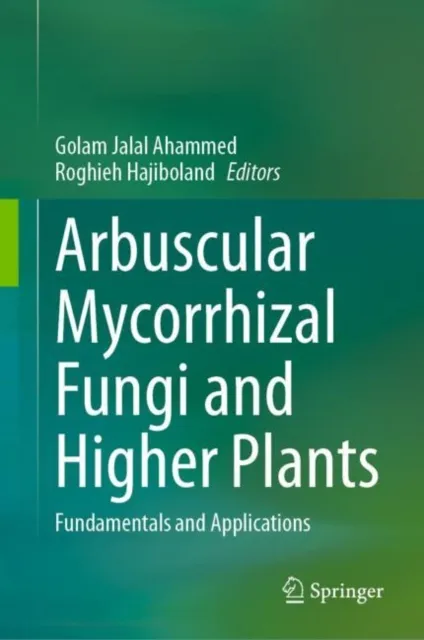
Arbuscular Mycorrhizal Fungi and Higher Plants
Fundamentals and Applications

Introduction
This book covers the fundamentals of arbuscular mycorrhizal fungi (AMF) and higher plant symbiosis with potential implications in crop production. It provides new insights into our understanding of the mechanisms of AMF-mediated plant growth regulation and stress tolerance covering the most recent biochemical, physiological, molecular, environmental, and ecological studies.
Focus on Stress Tolerance
Focusing on AMF-induced physiological and molecular mechanisms of enhanced tolerance to stress, environmental stress is discussed in several dedicated chapters. The book provides not only updated information with new insights and perspectives but also several new topics, such as a comprehensive discussion on biotic stressors, AMF interaction with other microorganisms, non-host plant species, plant secondary metabolism, signaling events in plant-AMF symbiosis, AMF-mediated nutrient acquisition and subsequent stress tolerance.
Implications and Applications
The book also discusses the potential implications of AMF for sustainable crop production in the context of climate change. The book can be a useful reference book for academics and scientists involved in related research, such as academics in agronomy and plant sciences, scientists involved in beneficial fungi research, chemists, industrialists, and employees involved in the production and marketing of biofertilizers, master and doctoral degree students of agronomy, horticulture, and plant protection, consultants working on the production of crops in marginal environments as well as environmental scientists working for assisted phytoremediation programs.
Educational Use
It would also be suitable for agronomy, ecology, and plant science-related courses, such as plant stress physiology, plant growth-promoting microbes, and plant pathology to teach undergraduate, graduate, and postgraduate students at colleges and universities.