£41.99
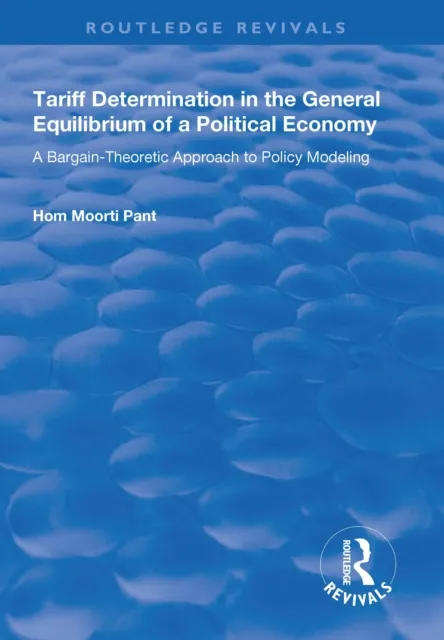
Applied General Equilibrium Analysis of India's Tax and Trade Policy

Publication Year and Context
This title was first published in 2003. India''s tax revenues depend on manufacturing while agriculture and services generate employment. WTO''s Uruguay and Doha rounds imply large tariff cuts. This affects the competitiveness of the Indian manufacturing sector and has implications for government deficits.
Policy Implications and Market Distortions
Excessive dependence on indirect taxes and subsidies to regulate markets introduces distortions and is incompatible with free market principles. The book analyses welfare implications of fiscal and trade policies for India.
Methodology and Theoretical Framework
To put the results in perspective, developments in trade theory, public finance and Computable General Equilibrium (CGE) modelling are covered. Theoretical results are juxtaposed with empirical findings from these models. Methodology to construct CGE models is also covered.
Trade Model and Assumptions
The trade model covers tariff cuts under various assumptions besides incorporating "new trade theory". As tax reforms and tariff cuts are independent, past tax reforms like MODVAT (MODified VAT) and proposed reforms like VAT, elimination/reduction of subsidies are covered using a separate tax model.