£41.99
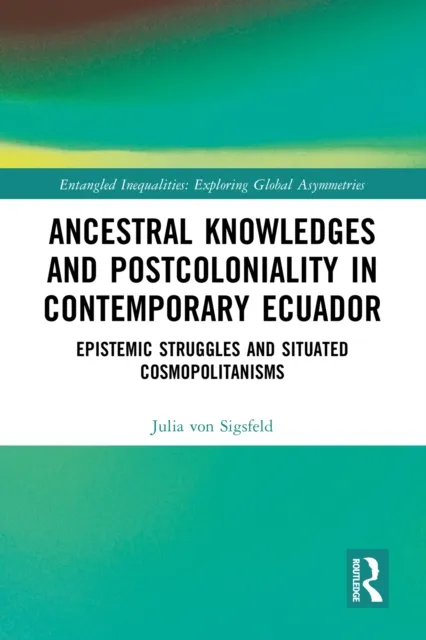
Ancestral Knowledges and Postcoloniality in Contemporary Ecuador
Epistemic Struggles and Situated Cosmopolitanisms

Introduction
In light of an unprecedented constitutional acknowledgement of diverse epistemologies and stipulation making the protection and advancement of so-called ancestral knowledges a duty of the state, this research provides an analysis of the uptake of historically subalternised knowledges by the state during the government of Rafael Correa (2007-2017), as well as of the strive for epistemic justice by peoples and nationalities' organisations in the context of struggles for social change, decolonisation, and self-determination.
Analysis and Framework
On the basis of rich empirical material, the analysis traces state discourses and practices and mechanisms to govern ancestral knowledges in the framework of the government's Knowledge Society project and delineates how leaders of peoples and nationalities' organisations struggle for the decolonisation of knowledge.
Significance
This monograph will be of interest to those concerned with relations between peoples and nationalities and Latin American states, politics of recognition and collective rights, the workings of purportedly post-neoliberal governments and the possibilities and limits for alternatives to development, the struggle of peoples and nationalities' organisations for (epistemic) decolonisation, as well as ongoing (re-)conceptualisations of cosmopolitanisms against restructurations of the coloniality of knowledge and being.