£45.00
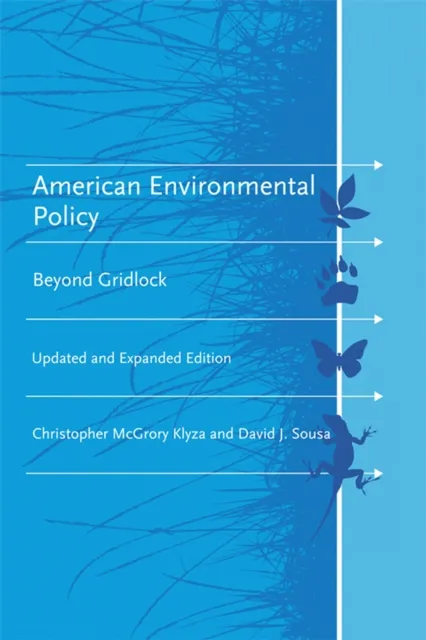
American Environmental Policy, updated and expanded edition

Overview
An updated investigation of alternate pathways for American environmental policymaking made necessary by legislative gridlock.
The “golden era” of American environmental lawmaking in the 1960s and 1970s saw twenty-two pieces of major environmental legislation (including the Clean Air Act, Clean Water Act, and Endangered Species Act) passed by bipartisan majorities in Congress and signed into law by presidents of both parties. But since then partisanship, the dramatic movement of Republicans to the right, and political brinksmanship have led to legislative gridlock on environmental issues. In this book, Christopher Klyza and David Sousa argue that the longstanding legislative stalemate at the national level has forced environmental policymaking onto other pathways.
Policy Paths and Case Studies
Klyza and Sousa identify and analyze five alternative policy paths, which they illustrate with case studies from 1990 to the present: “appropriations politics” in Congress; executive authority; the role of the courts; “next-generation” collaborative experiments; and policymaking at the state and local levels. This updated edition features a new chapter discussing environmental policy developments from 2006 to 2012, including intensifying partisanship on the environment, the failure of Congress to pass climate legislation, the ramifications of Massachusetts v. EPA, and other Obama administration executive actions (some of which have reversed Bush administration executive actions). Yet, they argue, despite legislative gridlock, the legacy of 1960s and 1970s policies has created an enduring “green state” rooted in statutes, bureaucratic routines, and public expectations.