£89.50
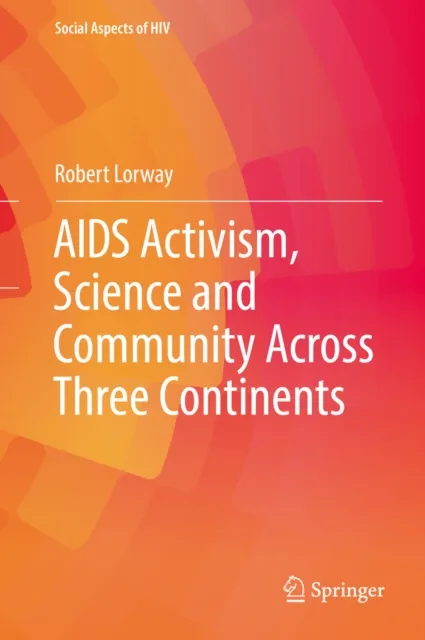
AIDS Activism, Science and Community Across Three Continents

Overview
This book critically examines the many complex entanglements between AIDS activism and HIV science. It takes readers on a medical anthropological expedition across time and space that highlights the stakes from the perspective of those most affected by the epidemic.
Author Robert Lorway reveals how early in the HIV epidemic, amid inadequate government leadership, communities of people living with and directly affected by HIV and AIDS rose to become a vital force at the forefront of prevention responses. Yet now, more than three decades later, HIV prevention and treatment is increasingly being placed under the jurisdiction of clinical, epidemiological, and management scientific expertise.
Key Questions
In this kind of context, where does activism figure into the possibility of more democratized collaborations between affected communities, scientists, and policy makers?
Research and Data
Coverage draws upon the findings from an array of community research projects conducted in Canada, India, and Kenya over a 22-year period. It weaves together rich, original data sources that range from in-depth qualitative interviews, field notes, and primary and secondary archival document retrievals in these three regions.
Thematic Focus
Offering a rich diversity in perspectives, this book tackles the broader themes related to global health policy, science, and transnational activism at the same time as it highlights the experiences and local arenas where debates about activism and science play out.
Conclusion
In the end, Lorway questions the growing expectation for affected communities themselves to produce sound evidence to legitimize their advocacy projects. He calls for the planners and implementers of biomedically oriented HIV research and interventions to more meaningfully engage with communities in ways that de-monopolize decision making as a matter of ethics and improved scientific practice.