£52.99
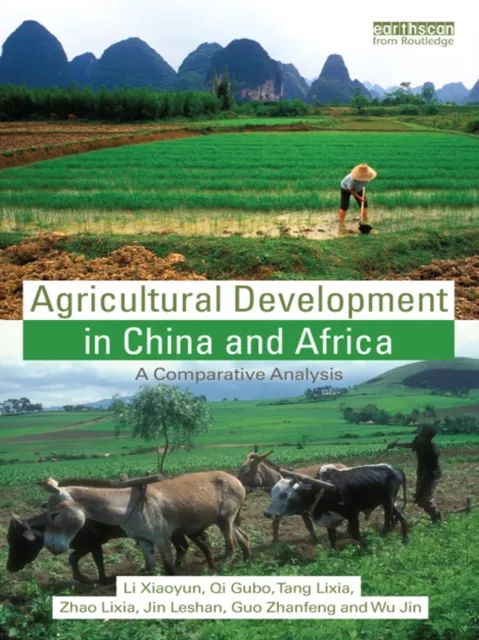
Agricultural Development in China and Africa
A Comparative Analysis

Interest in Agricultural Development
Many African countries are increasingly interested in learning from China''s experiences in achieving effective agricultural development. The Chinese government and academic community are also keen to share experiences and lessons with Africa. China made agriculture one of its development assistance priorities at the Third FOCAC Summit in Beijing in 2006.
Purpose of the Study
This systematic comparative study of agricultural development in China and Africa provides a unique basis for African countries and international organizations seeking to understand agricultural development in China, and for China to understand agricultural development on the African continent. The book highlights experiences and lessons from China and, in particular, analyzes why Africa has not yet been able to emulate China''s agricultural development trajectory.
Comparison and Analysis
It compares the similarities and discrepancies in conditions, processes, and outcomes between China and Africa from the perspectives of investment, science and technology, policies and international development aid. Based on this it explores which experiences and lessons from China''s agriculture development can be shared with African countries in order to contribute to the sustainable improvement and transformation of African agriculture.
Conclusion
It does not claim that China has all of the answers, but while recognizing the diversity within both China and Africa, concludes that much can be gained from such a comparison.