£279.99
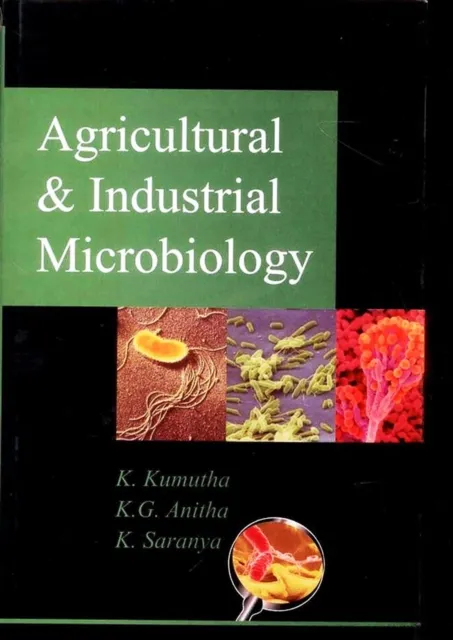
Agricultural and Industrial Microbiology

Introduction
In this 21st century Microbiology is emerging as the key biological science as it has a paramount range of application in agriculture and industrial science that yields more economic returns and sounds more wealthy and green. Microbiology is therefore taught to the students all over the world. Agricultural and Industrial Microbiology is taught as one of the important subject to the undergraduate and postgraduate students in Agricultural universities under their usual curriculum. Therefore, in order to benefit the students, this book is written to discuss the basics of microorganisms and give insight coverage of the various aspects of Agricultural and Industrial Microbiology.
Basic Concepts
The preliminary chapters (Chapters 1 to 11) deal with the general basics of Microbiology like historical development; bacterial morphology and classification; nutrition, growth, control and metabolism of microorganisms. Chapters 12 to 19 cover broadly the basic and applied aspects of Soil Microbiology. For instance, describes microbial interactions, nutrient transformations in soil and biofertilizers.
Fermentation and Applications
In the next chapters 20 and 21, a concept of fermentation is introduced along with its history. The chapter 22 briefly explains the types of fermentation. Chapters 23 to 32 discuss the application of microbes in industries to get valuable economic products of high utility like fermented foods, alcoholic beverages, antibiotics, etc. In chapter 32 and 34, we discuss the miscellaneous roles of microorganisms in biofuel production and purification of potable water.
Conclusion
The subject matter in this textbook is basic and more information is presented pertaining to ‘Agricultural and Industrial Microbiology’.