£50.00
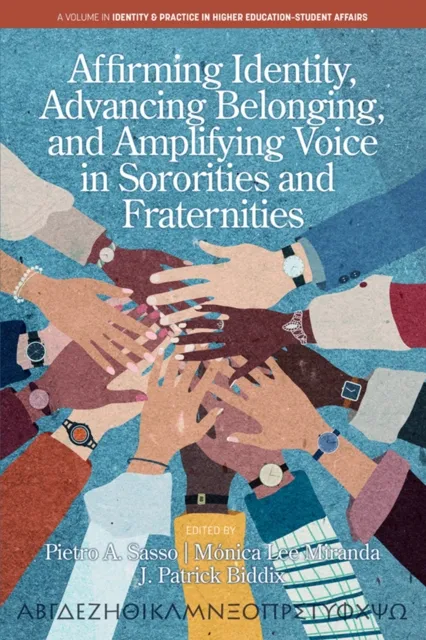
Affirming Identity, Advancing Belonging, and Amplifying Voice in Sororities and Fraternities

In the wake of the #AbolishGreekLife and other calls for racial justice
The role of identity development also becomes ever increasingly important as we consider how to make the sorority/fraternity more inclusive for our students. In the end, it may really be the power of inclusion on college campuses that leads to many of the educational goals that we yearn for in student growth: the formal and informal social interactions, bonded in reflective learning, that help build social and academic success. In this we can celebrate together, especially those of us who have romanticized so many 'bright college years.'
Response to a call for existential exploration
This text is a response to a call for existential exploration as an attempt to critically revivify our understanding of the sorority/fraternity experience as it contributes specifically to students' identity development and learning.
Centering experiences through three A's
The text is grouped around centering their experiences through three A's: Amplifying Voice, Affirming Identity, and Advancing Belonging to highlight the identity experiences of the diverse spectrum of fraternity and sorority members across the intersections of identity so often excluded from the literature.
Chapters in this text attempt to foreground how the fraternity/sorority experience explicitly contributes to these areas of student development across multiple identities including race, ethnicity, culture, gender identity, social class, and ability. Authors critically interrogate systems of oppressions that subjugate marginality from those with intersectional identities to recognize the larger challenges facing the sorority/fraternity movement as an attempt to disrupt these systems to better identify influences on identity development.