£179.50
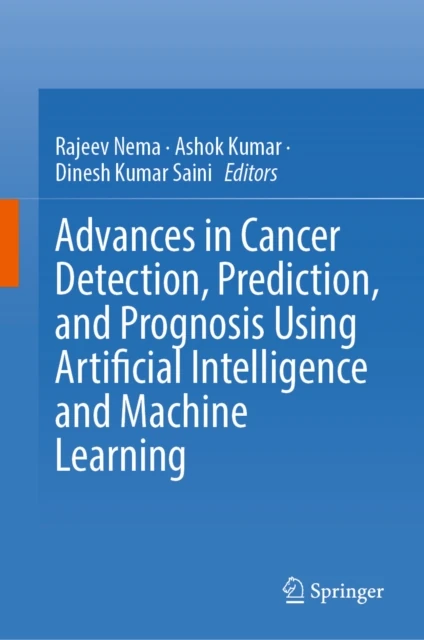
Advances in Cancer Detection, Prediction, and Prognosis Using Artificial Intelligence and Machine Learning

Overview of Computational Biology in Cancer Diagnosis
This book covers all aspects of computational biology in studying cancer diagnosis and prognosis, including newer applications involving infection and inflammation, as well as basic information on advanced simulation techniques. It describes the different tools, risk-based modeling techniques, early prediction algorithms and the biomarkers of different cancers that help in their early and better diagnosis in routine clinical practice involving multiple organs and systems.
Early Diagnosis and Artificial Intelligence
Early cancer diagnosis and artificial intelligence (AI) are rapidly evolving fields, with the UK's National Health Service aiming to improve early diagnosis rates to 75% by 2028. Screening can improve early cancer detection and mortality, but patient selection and risk stratification are key challenges. AI algorithms can facilitate cancer diagnosis by triggering investigation in screened individuals according to clinical parameters and automating clinical workflows where capacity is limited. Machine learning, which learns complex data patterns to make predictions has the potential to revolutionize early cancer diagnosis and support capacity concerns through automation.
Cancer Types Covered
The chapters present the advances in diagnosing different types of cancer including bladder cancer, breast cancer, colorectal cancer, kidney (renal cell) cancer, lung cancer, lymphoma, pancreatic cancer, prostate cancer, skin cancer, uterine and metastatic cancers. The chapters also cover recurrent cancer, advanced cancer treatment, and the management of cancer in adolescents and young adults. The pan-cancer analyses presented in the book cover all aspects of early diagnosis, supplemented by numerous illustrations and figures to offer a fresh perspective and lucid understanding of computer-based approaches in cancer management.
Target Audience and Benefits
This book simplifies computational methods in medical diagnosis and highlights the benefits of early detection compared to other methods. It is targeted at biomedical scientists and clinical practitioners who conduct artificial intelligence-based research.