£119.50
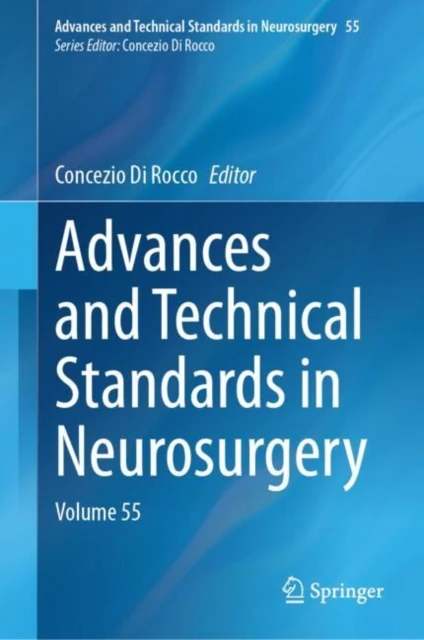
Advances and Technical Standards in Neurosurgery
Volume 55

Book Overview
This volume maintains the structure of previous ATSN series volumes, offering a balanced distribution of chapters that cover recent advances in neurosurgery and reviews of major neurosurgical conditions. Key sections of the volume provide a detailed review of tumors, including those of the optic pathways, hypothalamus, and pituitary adenomas. These sections highlight the renewed interest in surgical options for these tumors, emphasizing multi-specialist treatment approaches.
Development of Instruments and Techniques
The initial chapters focus on the development of instruments and techniques that facilitate minimally invasive approaches to various regions of the brain and cranio-vertebral junction.
Specific Pathologies Covered
The volume also includes a chapter on colloid cysts of the third ventricle, which complements the discussion of surgical approaches for anterior skull base and frontal basal region pathologies. Other chapters are dedicated to cerebral arterial aneurysms and arteriovenous malformations, exploring the advantages of combined therapeutic strategies for safer and more effective management of these complex lesions.
Surgical Approaches and Outcomes
The final chapters investigate the benefits of complete excision of spinal lipomas versus partial resections and the more extensive excision of brain tissue harboring a glioblastoma (lobectomy) versus simple resection of the tumor and its infiltration into the surrounding brain parenchyma.
Target Audience and Purpose
Overall, the book is primarily aimed at mature and experienced neurosurgeons, but it is also beneficial for younger practitioners. It emphasizes a continuous reconsideration of well-known diseases in terms of new approaches that combine increased efficacy with decreased risk for the patient.