£7.79
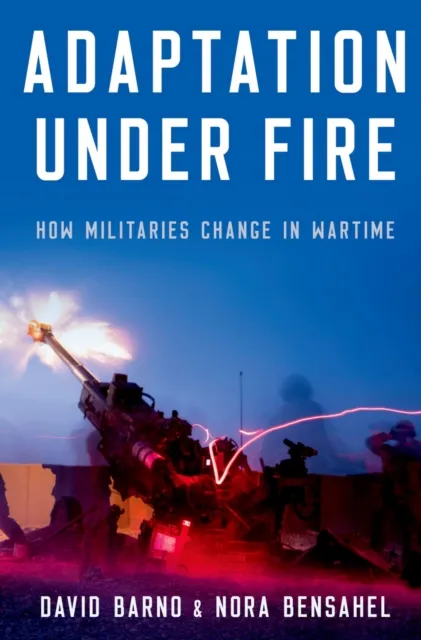
Adaptation under Fire
How Militaries Change in Wartime

Overview
A critical look into how and why the U.S. military needs to become more adaptable. Every military must prepare for future wars despite not really knowing the shape such wars will ultimately take. As former U.S. Secretary of Defense Robert Gates once noted: "We have a perfect record in predicting the next war. We have never once gotten it right." In the face of such great uncertainty, militaries must be able to adapt rapidly in order to win.
About the Book
Adaptation under Fire identifies the characteristics that make militaries more adaptable, illustrated through historical examples and the recent wars in Iraq and Afghanistan. Authors David Barno and Nora Bensahel argue that militaries facing unknown future conflicts must nevertheless make choices about the type of doctrine that their units will use, the weapons and equipment they will purchase, and the kind of leaders they will select and develop to guide the force to victory.
Challenges of Adaptation
Yet after a war begins, many of these choices will prove flawed in the unpredictable crucible of the battlefield. For a U.S. military facing diverse global threats, its ability to adapt quickly and effectively to those unforeseen circumstances may spell the difference between victory and defeat.
Framework and Analysis
Barno and Bensahel start by providing a framework for understanding adaptation and include historical cases of success and failure. Next, they examine U.S. military adaptation during the nation's recent wars, and explain why certain forms of adaptation have proven problematic.
Conclusions and Recommendations
In the final section, Barno and Bensahel conclude that the U.S. military must become much more adaptable in order to address the fast-changing security challenges of the future, and they offer recommendations on how to do so before it is too late.