£7.79
1837
Russia's Quiet Revolution

Introduction
Historians often think of Russia before the 1860s in terms of conservative stasis, when the "gendarme of Europe" secured order beyond the country’s borders and entrenched the autocratic system at home. This book offers a profoundly different vision of Russia under Nicholas I. Drawing on an extensive array of sources, it reveals that many of modern Russia’s most distinctive and outstanding features can be traced back to an inconspicuous but exceptional year.
The Significance of 1837
Russia became what it did, in no small measure, because of 1837. The catalogue of the year’s noteworthy occurrences extends from the realms of culture, religion, and ideas to those of empire, politics, and industry. Exploring these diverse issues and connecting seemingly divergent historical actors, Paul W. Werth reveals that the 1830s in Russia were a period of striking dynamism and consequence, and that 1837 was pivotal for the country’s entry into the modern age.
Events of 1837
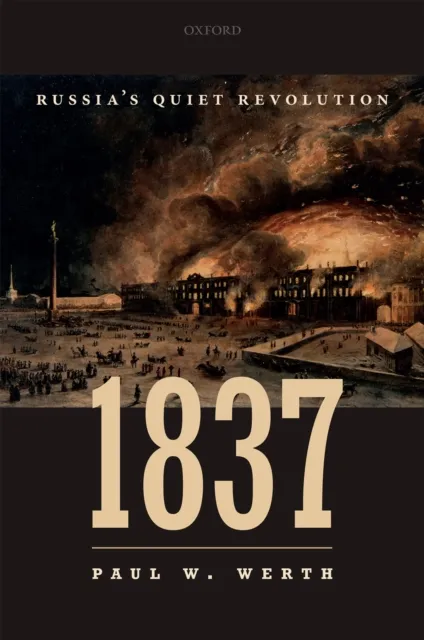
From the romantic death of Russia’s greatest poet Alexander Pushkin in January to a colossal fire at the Winter Palace in December, Russia experienced much that was astonishing in 1837: the railway and provincial press appeared, Russian opera made its debut, Orthodoxy pushed westward, the first Romanov visited Siberia—and much else besides. The cumulative effect was profound.
Impact and Legacy
The country’s integration accelerated, and a Russian nation began to emerge, embodied in new institutions and practices, within the larger empire. The result was a quiet revolution, after which Russia would never be the same.