£429.99
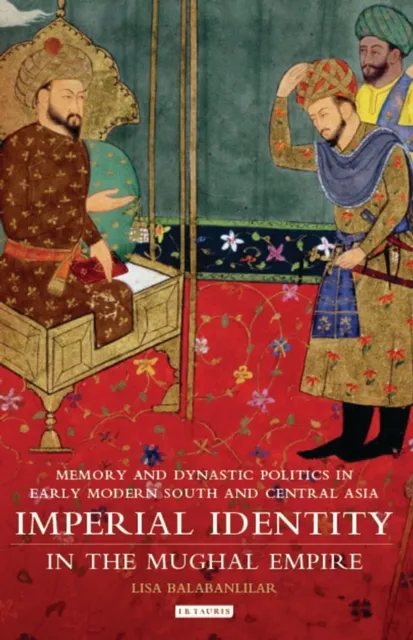
Textbook of Mughal Government and Administration

Introduction
In the early sixteenth century, descendants of the Mongol, Turkish, Iranian, and Afghan invaders of South Asia—the Mughals—invaded India under the leadership of Zahir-ud-Din Babur.
Babur was the great-grandson of Timur Lenk (Timur the Lame, from which the Western name Tamerlane is derived), who had invaded India and plundered Delhi in 1398 and then led a short-lived empire based in Samarkand (in modern-day Uzbekistan) that united Persian-based Mongols (Babur’s maternal ancestors) and other West Asian peoples.
The Mughal Government
The Mughal Government was a highly centralized autocracy. The Crown was the pivot of the entire administrative machinery. As the government was absolute and highly centralized, the written records multiplied. No wonder, the Mughal Government was called a Kaghzi Raj or paper government.
A large number of books had to be maintained, e.g., copies of correspondence, nominal rolls, descriptive rolls, history of the services of the officers, news-letters and dispatches, etc. This book places this subject in its most modern context as the foundation of this subject.