£32.89
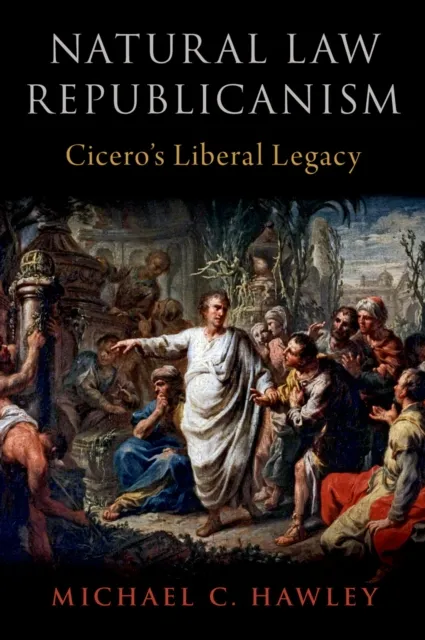
Natural Law Republicanism
Cicero's Liberal Legacy

Introduction
By any metric, Cicero's works are some of the most widely read in the history of Western thought. Natural Law Republicanism suggests that perhaps his most lasting and significant contribution to philosophy lies in helping to inspire the development of liberalism.
Individual rights, the protection of private property, and political legitimacy based on the consent of the governed are often taken to be among early modern liberalism's unique innovations and part of its rebellion against classical thought. However, Michael C. Hawley demonstrates how Cicero's thought played a central role in shaping and inspiring the liberal republican project.
Cicero's Influence on Political Thought
Cicero argued that liberty for individuals could arise only in a res publica in which the claims of the people to be sovereign were somehow united with a commitment to universal moral law, which limits what the people can rightfully do.
Figures such as Hugo Grotius, John Locke, and John Adams sought to work through the tensions in Cicero's vision, laying the groundwork for a theory of politics in which the freedom of the individual and the people's collective right to rule were mediated by natural law.
Legacy and Modern Relevance
Tracing the development of this intellectual tradition from Cicero's original articulation through the American Founding, Natural Law Republicanism explores how our modern political ideas remain dependent on the legacy of one of Rome's great philosopher-statesmen.