£9.99
British Tits

In addition to dealing with the general biology and behaviour of the birds, Dr Perrins gives full attention to such things as their social lives, their intelligence and adaptiveness, and their puzzling ability to adjust their population sizes to the future availability of food. This edition is exclusive to newnaturalists.com
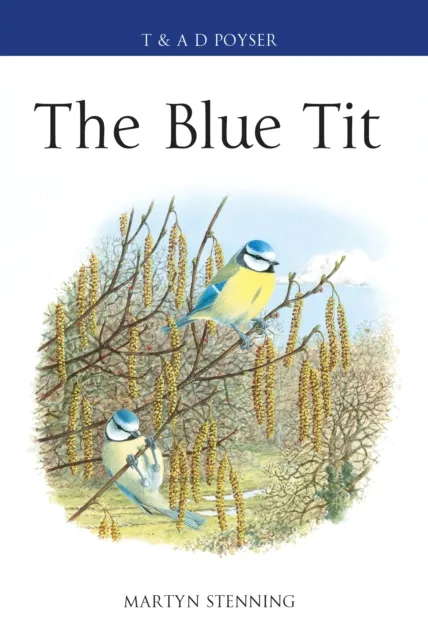
Because of their ubiquity and apparent boldness, the tits are among the most easily observed, and the most popular, of all British birds. The Blue Tit, particularly, is an attractive and confident bird and will arrive at a well-stocked bird table, or at a bag of peanuts outside a window, within a few minutes of its being set out.
Curiously, little has been written about tits for the general naturalist. In this book, Christopher Perrins, who succeeded the late David Lack at the Edward Grey Institute of Ornithology in Oxford, sets out to remedy this omission. Dr Perrins has spent many years studying these small birds in great detail and has himself made many important discoveries about their lives and behaviour.
The book deals with seven species of tit. These include the six members of the true tits – Coal, Great, Blue, Crested, Marsh and Willow Tits – as well as the more distantly related Long-tailed Tit. In addition to dealing with the general biology and behaviour of the birds, Dr Perrins gives full attention to such things as their social lives, their intelligence and adaptiveness, and their puzzling ability to adjust their population sizes to the future availability of food. Dr Perrin's study demonstrates that there is much unsuspected complexity – some of it still not clearly understood – in the lives of even the most popular of groups of birds; as such it will be of interest to every birdwatcher, amateur and professional alike.